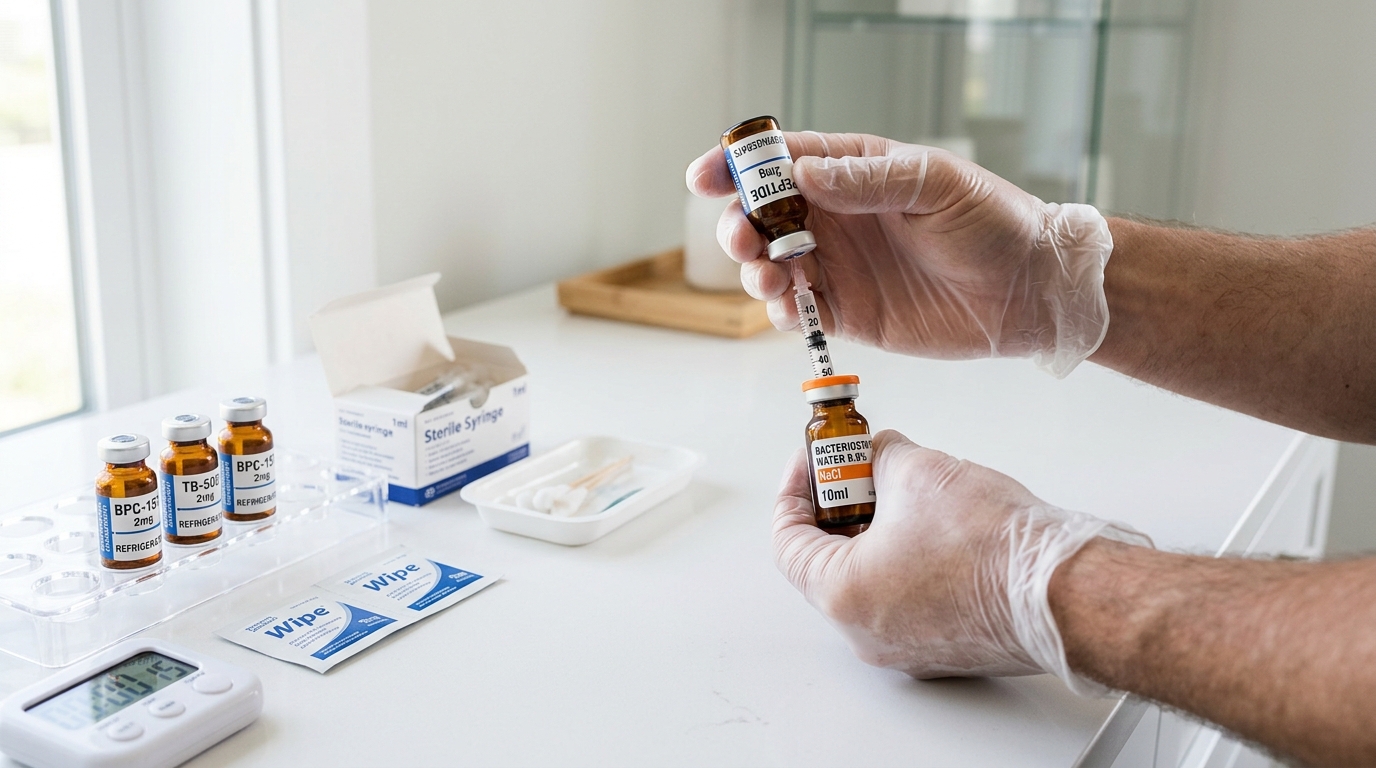
Proper peptide storage is one of the most underappreciated aspects of peptide research protocols. Degraded peptides don't just underperform — they may produce unpredictable byproducts. Understanding the chemistry of lyophilization stability, reconstitution solvents, temperature effects, and photosensitivity is essential for anyone serious about working with research-grade peptides. This guide covers the science behind the most important storage variables.
Core principle: Lyophilized (freeze-dried) peptides are stable at room temperature for extended periods. Reconstituted peptides in solution are significantly more vulnerable to degradation and require careful cold storage, appropriate solvents, and minimal freeze-thaw cycling.
Why Lyophilization Works
Lyophilization — freeze-drying — removes water from a peptide solution under vacuum, leaving behind a dry powder (the "lyophilized cake") that is highly stable. The primary degradation pathways for peptides — hydrolysis, oxidation, and beta-elimination — all require water as a reactant or solvent medium. Remove the water, and these reactions proceed at negligible rates.
Properly lyophilized peptides stored in sealed, dry conditions at room temperature are generally stable for 2–3 years. Refrigeration (4°C) can extend this further. Freezing lyophilized peptides at −20°C provides maximum shelf life — but refrigeration is usually sufficient for vials that will be used within 12–18 months.
Bacteriostatic Water (BAC Water): Why It Matters
Once a lyophilized peptide is reconstituted in solution, the peptide becomes vulnerable to microbial contamination. Bacteriostatic water contains 0.9% benzyl alcohol — a preservative that inhibits bacterial growth without disrupting peptide stability at normal concentrations. This is why BAC water is strongly preferred over plain sterile water for peptide reconstitution when the solution will be used over multiple injections.
Using sterile water (without benzyl alcohol) creates a solution with no microbial protection. If the vial stopper is punctured multiple times, microbial contamination risk increases with each use. BAC water's benzyl alcohol maintains bacteriostasis across repeated draws from the same vial.
Important notes on benzyl alcohol:
- Benzyl alcohol can reduce the activity of some highly sensitive peptides at high concentrations. At standard BAC water concentrations (0.9%), this is generally not clinically relevant for most common research peptides.
- Benzyl alcohol is contraindicated in neonates and should be avoided in that context entirely — not relevant for adult self-experimentation but worth noting.
- Some researchers prefer acetic acid (0.1–1%) for reconstitution of peptides with low water solubility. This is appropriate for certain peptides (e.g., some growth factor peptides) but generally does not offer bacteriostatic protection.
Optimal Storage Temperatures After Reconstitution
| Condition | Temperature | Expected Stability | Notes |
|---|---|---|---|
| Refrigerator (in use) | 2–8°C (36–46°F) | 30–45 days | Standard for active vials |
| Freezer (long-term) | −20°C (−4°F) | 6–12+ months | Minimize freeze-thaw cycles |
| Room temperature | 20–25°C (68–77°F) | Days to 1 week | Acceptable for short-term travel only |
| Lyophilized (sealed) | Room temp or cooler | 2–3 years | Optimal: 4°C or −20°C |
Freeze-Thaw Cycle Damage
Repeated freeze-thaw cycles are one of the most common causes of peptide degradation in research settings. When an aqueous peptide solution freezes, ice crystal formation can physically disrupt peptide structure. Thawing and refreezing creates cumulative structural damage that may reduce bioactivity and increase aggregation.
Research suggests that most peptides tolerate 3–5 freeze-thaw cycles with minimal measurable bioactivity loss, but losses become significant beyond that. The practical recommendation is to aliquot reconstituted peptide solutions into single-use volumes before freezing, avoiding repeated freeze-thaw of the same vial. For small-volume peptides, some researchers use 0.5mL insulin vials or amber microcentrifuge tubes for aliquoting.
Photosensitivity: Which Peptides Degrade in Light
Several peptide sequences contain amino acids vulnerable to UV-induced degradation, particularly tryptophan (Trp), tyrosine (Tyr), and phenylalanine (Phe). Peptides containing these residues should be stored in amber vials or wrapped in foil when not in use.
- High photosensitivity: Peptides containing multiple Trp residues (e.g., certain antimicrobial peptides and some growth factors)
- Moderate photosensitivity: Most common research peptides (BPC-157, TB-500, Ipamorelin) — protect from prolonged direct light but brief ambient exposure is not critical
- Low photosensitivity: Simple aliphatic peptides with no aromatic residues
Discard Criteria: When to Throw Out a Solution
Discard reconstituted peptide solutions if you observe:
- Visible particulate matter or cloudiness (clear solutions should remain clear)
- Color change (most peptides in solution are colorless to faint yellow)
- Unusual odor
- Vial stored beyond recommended temperature for extended periods
- More than 45 days since reconstitution at 4°C
- Evidence of vial stopper damage or contamination